Image from article: Queen Elizabeth I knighting Francis Drake, 1581. Credit...Alamy Book Review by Nigel Cliff , The New York Times , March 10, 2021 IN SEARCH OF A KINGDOM Francis Drake, Elizabeth I, and the Perilous Birth of the British Empire By Laurence Bergreen England is a nation divided. In one camp, nationalists decry the diabolical threat to their freedom posed by dastardly Continentals, instead throwing their hopes on a shadow empire of boundless trading opportunities. In the other, pro-Europeans bitterly protest that their country is making a cataclysmic mistake and bide their time. Sound familiar? Just kidding. It’s not Boris Johnson’s Brexit Britain but the England of the late 16th century, the subject of “In Search of a Kingdom.” In Laurence Bergreen’s colorful assessment, an unlikely alliance between Queen Elizabeth I and Sir Francis Drake empowered English Protestants to see off Continental Catholics and stake out the beginnings of the British ...
Exposure to art — even uncomfortable art — is healthy, stimulating, and worthy of students’ debate. Image The San Francisco Board of Education voted to cover “The Life of Washington,” a mural cycle from 1935-36, at a school named for the first president. Victor Arnautoff’s frescoes include images of slaves and a dead Native American, which angered some students and parents. Credit Credit Jim Wilson/The New York Times By Roberta Smith , The New York Times July 26, 2019 512 After half a century of intermittent debate and protest, the San Francisco Board of Education voted unanimously in June to whitewash the 13 murals depicting the life of George Washington that line the halls of a high school named for the first president. The murals’ offense is that they depict some ugly truths about the history of the United States, namely two of its original sins: slavery and the Native American genocid...
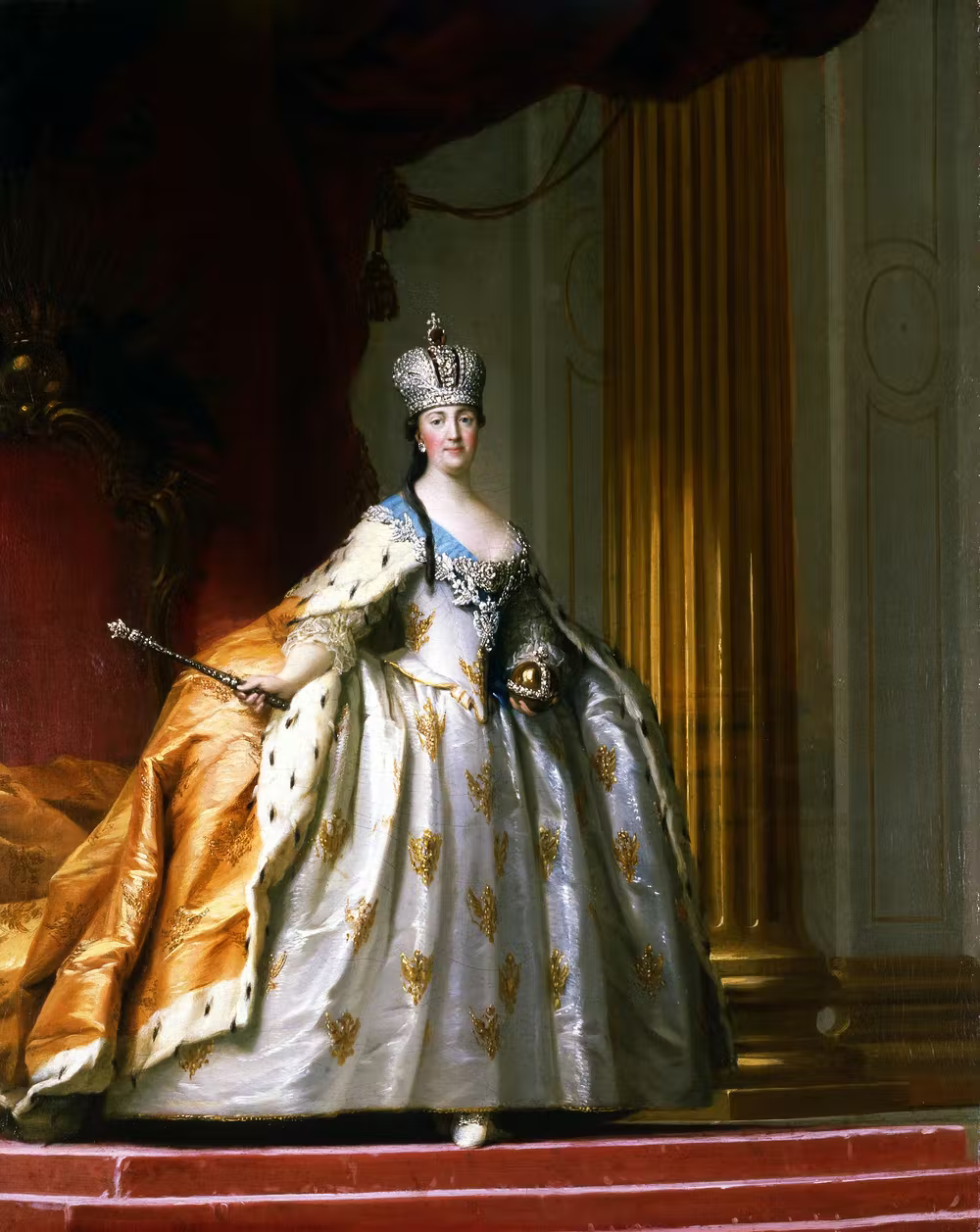
image from article: A portrait of Catherine the Great by Danish painter Vigilius Eriksen circa 1765. (Pixabay) James Krapfl Associate Professor of History, McGill University, The Conversation , Published: March 14, 2022 11.52am EDT [ original article contains numerous links ] In his speech legitimizing Russia’s annexation of Crimea in 2014, Vladimir Putin invoked 18th-century history. It was, after all, Catherine II (also known as Catherine the Great) who had first acquired the peninsula for Russia at the same time she seized what is now Belarusian territory in the first partition of the Polish-Lithuanian Commonwealth . In the second partition 21 years later, Catherine acquired extensive lands lying today in both Belarus and Ukraine. She amassed even more two years later, in Poland-Lithuania’s final partition . The parallels between [jb: "German"-born] Catherine’s and Putin’s designs on these territories are remarkable , and ...



Comments
Post a Comment